NASA timed Voyager 2’s 1977 launch to catch an alignment of the four outer planets that only lines up once every 176 years, letting a single spacecraft slingshot past Jupiter, Saturn, Uranus and Neptune on borrowed gravity — a shortcut through the solar system that will not repeat until the 2150s
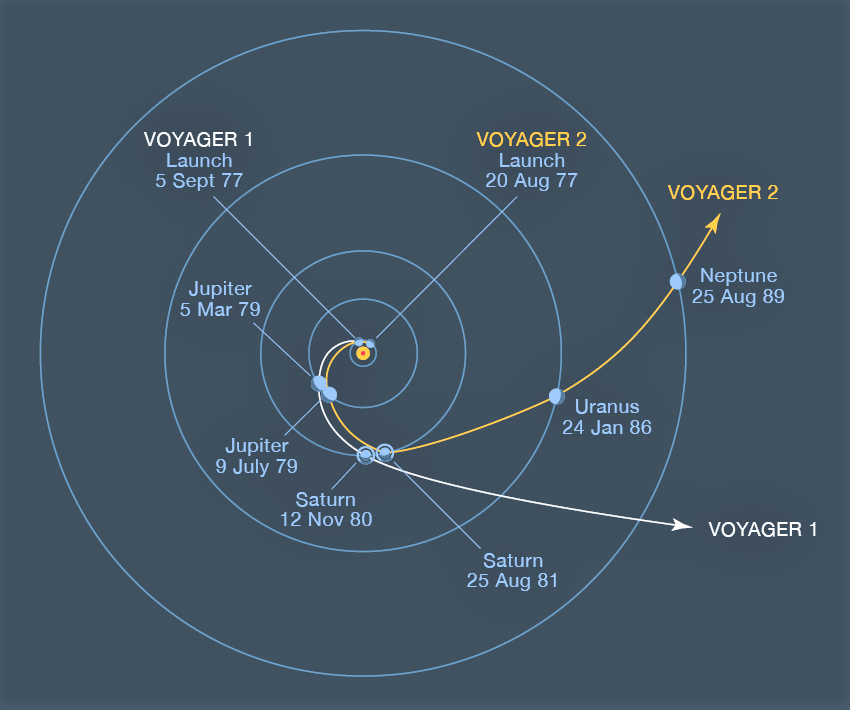
Image: SpaceDaily
Machine-written summary, checked against the sources below
Voyager 2 launched in 1977 to take advantage of a rare alignment of Jupiter, Saturn, Uranus and Neptune that occurs only once every 176 years. The spacecraft used successive gravity assists to visit all four outer planets on a single trajectory. That launch window will not recur until the 2150s.
Voyager 2’s four-planet route depended on a rare chain of planetary encounters, successive transfers of orbital momentum and a launch window that will not return until the 2150s. The post NASA timed Voyager 2’s 1977 launch to catch an alignment of the four outer planets that only lines up once every 176 years, letting a single spacecraft slingshot past Jupiter, Saturn, Uranus and Neptune on borrowed gravity — a shortcut through the solar system that will not repeat until the 2150s appeared first on Space Daily .
Summary by SpaceDaily