Five rockets on US and European launch contracts have not flown, and outside China 2 of 11 new companies' first rockets since 2020 reached orbit on their first flight
Rocket Lab moved Neutron's first launch to 2027 on October 14. Neutron, Stoke Space's Nova and Relativity's Terran R are on the Space Force's Lane 1 launch contract, and RFA One and PLD Space's Miura 5 hold European Space Agency contracts; none of the five has flown. Since January 2020, 11 companies outside China have launched a first orbital rocket: 2 reached orbit on the first flight, 4 reached it 8 to 17 months after a failed first flight, and 5 have not reached orbit.
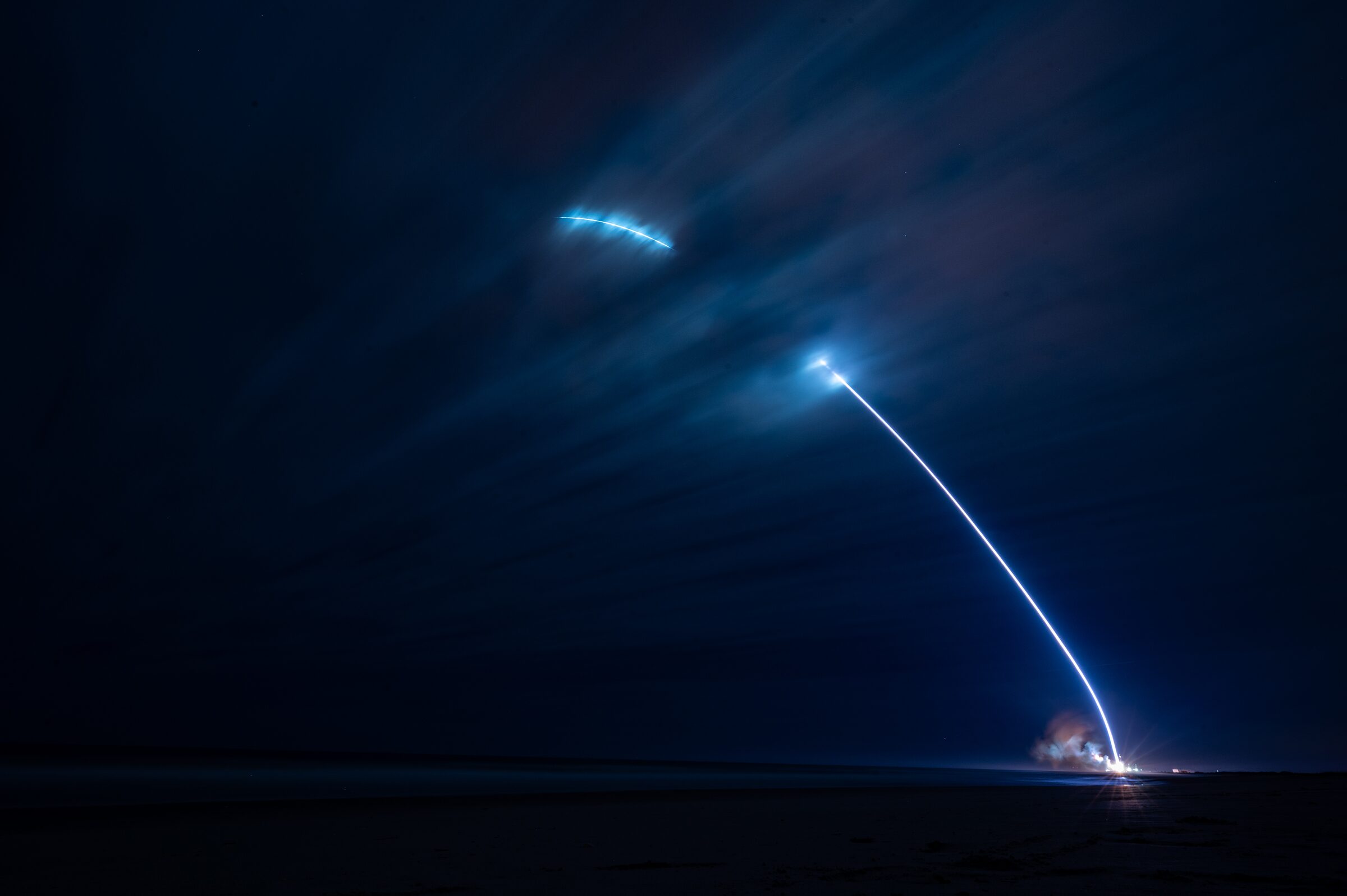
Rocket Lab said on October 14 that the first launch of Neutron, its medium-lift rocket, is now expected in 2027. It is the fourth year named for that launch. Rocket Lab aimed for 2024 when it announced the rocket in March 2021, and the desk's ledger holds its later targets: the end of 2025, stated in August 2025, and the fourth quarter of 2026, stated in February. Rocket Lab is one of seven providers on the Space Force's National Security Space Launch Phase 3 Lane 1 contract, and Neutron is one of five rockets on US and European government launch contracts that have not flown.
This report sets those contracts beside the desk's launch record from January 2020 to October 15, 2026: how the first flights of new rockets went, how first-flight dates stated in advance compared with the flights, and what the Claims & outcomes ledger records about rocket schedules.
Five rockets on US and European launch contracts have not flown
Lane 1 is the Space Force's contract for national security launches that can carry more risk. Space Systems Command picked SpaceX, United Launch Alliance and Blue Origin in June 2024, added Rocket Lab and Stoke Space in March 2025, and added Impulse Space and Relativity Space's Relativity Federal on July 8, 2026, each of the last two with a $5 million task order for risk and capability assessments. On July 17 the Space Force raised the contract's ceiling from $5.6 billion to $17 billion, and a Space Systems Command spokesperson put the expected missions at about 170, up from 60. The contract runs from 2025 to 2034, a five-year base period and a five-year option. The acting portfolio acquisition executive for space access said the Lane 1 providers can compete for missions "as soon as they've successfully launched at least once." The rockets and stage that the four added since 2025 offer have not launched: Neutron, Stoke's Nova, Relativity's Terran R and Impulse's Helios, an upper stage designed to fly on a medium-lift rocket.
Lane 2 carries the most demanding missions. Its three providers, SpaceX, ULA and Blue Origin, share about 54 missions that launch from 2027 to 2032. For fiscal 2026 the Space Force assigned five to SpaceX for $714 million and two to ULA for $428 million, the Congressional Research Service reports, and Blue Origin received none. Blue Origin's New Glenn first flew on January 16, 2025 and has flown 3 times, reaching orbit on 2 of them; the third flight, on April 19, 2026, failed, and the vehicle for the fourth exploded during a static fire on May 28. Blue Origin's chief executive said in June that New Glenn would return to flight by the end of 2026.
The European Space Agency signed the first European Launcher Challenge contracts on August 27, 2026: €197.8 million for Isar Aerospace, €186.9 million for Rocket Factory Augsburg and €158.9 million for PLD Space, released as milestones are met. ESA said its award to MaiaSpace was nearing completion. Each provider must achieve an orbital launch before 2028. Isar's Spectrum reached orbit on its second flight on September 5, 2026, nine days after the signing, and ESA said the flight made Isar the first provider to reach that milestone. In late July, after its first week of testing on the pad in Scotland, RFA de-stacked its first RFA One to investigate an issue with the vehicle and gave no new date; ESA wrote on September 23 that hot-fire tests of the complete rocket on the pad would come before its first test flight. PLD Space said in June that Miura 5 would make its first flight before the end of 2026. MaiaSpace told European Spaceflight in July that it targets the second half of 2027 for Maia's first launch, an orbital attempt with no suborbital test before it.
NASA's Launch Services II contract, which buys launches for NASA missions, has an ordering period through June 2030 and admits new launch services once a year. NASA added Terran R on September 9 and New Glenn 9×4, a New Glenn configuration with no flight in the record, on September 29. The 2026 on-ramp notice in the desk's index says the request for proposals stays open until June 30, 2030.
Canada's defense department announced on March 16, 2026 a 10-year, C$200 million lease of a launch pad near Canso, Nova Scotia, run by Maritime Launch Services and due at initial operating capability by the end of 2026. Canada's Budget 2025 set aside C$182.6 million over three years for a sovereign launch program, and the department has C$105 million in grants through Launch the North, a contest in its IDEaS innovation program aimed at an initial light-lift launch capability by 2028. The first round conditionally approved C$8.3 million each for NordSpace, Canada Rocket Company and Reaction Dynamics. None of the three companies has a launch in the desk's record.
| Rocket or stage | Builder | Program | In the launch record to October 15, 2026 | Latest stated first flight (date reported) |
|---|---|---|---|---|
| Neutron | Rocket Lab | NSSL Lane 1 | Not flown | 2027 (October 14, 2026) |
| Nova | Stoke Space | NSSL Lane 1 | Not flown | early 2027 (September 8, 2026) |
| Terran R | Relativity Space | NSSL Lane 1, NASA NLS II | Not flown | as soon as late 2026 (March 10, 2025) |
| Helios (upper stage) | Impulse Space | NSSL Lane 1 | Not flown | 2027 (June 3, 2026) |
| RFA One | Rocket Factory Augsburg | ESA Launcher Challenge | Not flown | none stated since the vehicle was de-stacked in late July (July 31, 2026) |
| Miura 5 | PLD Space | ESA Launcher Challenge | Not flown | before the end of 2026 (September 1, 2026) |
| Maia | MaiaSpace | ESA Launcher Challenge, award pending on August 27, 2026 | Not flown | second half of 2027 (July 29, 2026) |
| Spectrum | Isar Aerospace | ESA Launcher Challenge | Flown 2 times; first reached orbit September 5, 2026 | |
| New Glenn | Blue Origin | NSSL Lane 1, NSSL Lane 2, NASA NLS II | Flown 3 times; first reached orbit January 16, 2025 | return to flight by the end of 2026 (June 2, 2026) |
The European deadline for an orbital launch is the end of 2027
The Launcher Challenge is the one program here with a date for a first orbital launch. MaiaSpace's target, the second half of 2027, falls in the last six months before that deadline, and RFA has given no date since July. Lane 1 ties competition to a first successful launch, and its five-year base period and five-year option run to 2034. Canada's contest aims at a light-lift capability by 2028.
Outside China, 2 of 11 new companies' first rockets since 2020 reached orbit on their first flight
Between January 2020 and October 15, 2026, 11 companies outside China launched the first orbital rocket they had built. Two reached orbit on the first flight: Blue Origin's New Glenn on January 16, 2025 and Skyroot Aerospace's Vikram-I on July 18, 2026. Four failed on the first flight and reached orbit on a later one: Virgin Orbit's LauncherOne after 8 months, Astra's Rocket 3 after 14, Firefly's Alpha after 13 and Isar's Spectrum after 17. Five have not reached orbit: ABL Space Systems' RS1 and Relativity's Terran 1, each flown once, in January and March 2023; Space One's KAIROS, which has failed on all 3 of its flights; Gilmour Space's Eris, flown once in July 2025; and Innospace's HANBIT-Nano, flown once in December 2025.
Across all builders, 38 new orbital rockets made a first flight in the same period, and 19 reached orbit on it. Of the 38 rockets, 15 were Chinese, and 11 of those reached orbit on their first flight. Of the 23 from elsewhere, 8 did, and 6 of those 8 came from government agencies, armed services or companies that had launched to orbit before: Qased, SLS, Mir, Vulcan, Ariane 6 and Soyuz-5.
A flight counts here as reaching orbit when the record marks it a full success, the launch scorecard's rule for a payload placed in its intended orbit. The record marks Firefly's October 1, 2022 flight a success; SpaceNews reported that its payloads went to a lower orbit than planned and reentered within days. Starship's first flight, on April 20, 2023, is marked a failure; its first 13 flights followed planned suborbital paths, and Flight 14 reached orbit on September 28, 2026.
Four rockets first flew 27 to 49 months after the end of the earliest target year the desk found
ULA unveiled Vulcan in April 2015 with a first launch slated for 2019; it first flew on January 8, 2024. ESA's ministers approved Ariane 6 in December 2014 for a first launch in 2020; it flew on July 9, 2024. In July 2018 Ars Technica listed four large rockets with first launches scheduled for 2020: Ariane 6, NASA's Space Launch System, New Glenn and Vulcan. SLS first flew in November 2022, Vulcan and Ariane 6 in 2024 and New Glenn in January 2025. Isar Aerospace was targeting 2022 for Spectrum's first launch when Ars Technica reported on the company in September 2020; Spectrum first flew on March 30, 2025. Counted from the last day of the earliest target year the desk found for each, the first flights of Vulcan, Ariane 6, New Glenn and Spectrum came 48, 42, 49 and 27 months after it. For New Glenn the earliest target the desk found is the 2020 date in the July 2018 report; Blue Origin's 2016 statement is listed below among what the desk could not confirm.
Two rockets on Lane 1 have passed the earliest target year the desk found for them without flying. Relativity said in June 2021 that Terran R should be ready for launch in 2024; in April 2023 the company gave 2026, and in March 2025 it said as soon as late 2026. Neutron's four years are listed above. As of October 15, 2026, 21 months have passed since the end of 2024, the year each builder named when it announced its rocket. Ars Technica reported that Rocket Lab traces the latest delay to voids in a carbon composite propellant dome for the first stage, which followed a design change made after a first-stage tank ruptured in a pressure test in January. Rocket Lab's chief executive said the company expects to finish testing those parts before the end of the first quarter of 2027 and to set a launch date then.
Of the ledger's 17 claims about rocket schedules, 6 are missed and none is achieved
The Claims & outcomes ledger records company statements and targets in the wording of the source it cites, a company's own release or a reporter's account, and checks them against the record. Of its 84 claims, 17 are about a rocket's launch dates, its launch rate or the start of its flights from a new site. This count leaves out claims about payloads that ride a rocket, such as AST SpaceMobile's satellites on New Glenn. As of October 15, 2026, 6 are missed, 3 superseded, 4 at risk, 3 pending and 1 unverified. Missed is a date comparison: the due date passed without the outcome. Superseded means the company gave a new date for the same commitment. For this report the desk marked Rocket Lab's fourth-quarter 2026 Neutron claim superseded, added the 2027 claim from the October 14 filing, and updated six other assessments with the record as of October 15, 2026.
| Company | What the claim expects | Due | Status |
|---|---|---|---|
| Rocket Lab | Neutron's first launch before the end of 2025 | End of 2025 | Missed |
| Rocket Lab | Neutron's first launch in the fourth quarter of 2026 | Q4 2026 | Superseded |
| Rocket Lab | Neutron's first launch during 2027 | 2027 | Pending |
| Relativity Space | Terran R makes its first launch from Cape Canaveral by late 2026 | Late 2026 | At risk |
| Stoke Space | Launch Complex 14 at Cape Canaveral is activated and ready for Nova operations in early 2026 | Early 2026 | Unverified |
| Impulse Space | The first Helios kick-stage mission flies on a Falcon 9, carrying a Mira vehicle toward GEO | Mid-2026 | Superseded |
| Isar Aerospace | Spectrum's second flight, the qualification flight for commercial service, launches on or shortly after January 21, 2026 | Late January 2026 | Missed |
| Avio | Four Vega C launches completed during calendar 2025 | End of 2025 | Missed |
| Avio | First launch of the Vega E rocket occurs in 2027 or 2028 | 2027 or 2028 | Pending |
| Arianespace | Five Ariane 6 launches completed during calendar 2025, starting with a February flight | End of 2025 | Missed |
| Arianespace | Six to eight Ariane 6 launches completed during calendar 2026 | During 2026 | Pending |
| United Launch Alliance | A two-launches-per-month Vulcan tempo before the end of 2025 | End of 2025 | Missed |
| United Launch Alliance | Between 20 and 25 ULA launches during calendar 2026 | During 2026 | At risk |
| Blue Origin | A double-digit New Glenn launch count, around 12 flights, during 2026 | During 2026 | At risk |
| Blue Origin | New Glenn flies again after the May 28 static-fire explosion, on or before December 31, 2026 | End of 2026 | At risk |
| SSC (Swedish Space Corporation) | Perigee's Blue Whale 1 begins launching satellites from Esrange in 2025 | Starting 2025 | Missed |
| SSC (Swedish Space Corporation) | Firefly Alpha performs its first orbital launch from Esrange during 2026 | During 2026 | Superseded |
Open job postings rose at Rocket Lab, Relativity and Isar from July to October
The site's job feed reads the public job boards of Rocket Lab, Relativity Space and Isar Aerospace. Open postings at Rocket Lab went from 384 on July 24, 2026 to 597 on October 15, 2026, at Relativity from 341 to 365, and at Isar from 95 to 115. Blue Origin is left out of the chart because the feed reads at most 300 of its postings a day. Stoke Space, Impulse Space, Firefly, RFA, PLD Space and MaiaSpace are outside the feed.
The desk could not confirm seven dates, statuses and contract details
- The quarter of 2027 for Neutron's first launch. Rocket Lab's release names the year only.
- A first-flight date for Terran R newer than Relativity's March 2025 statement.
- Whether MaiaSpace's Launcher Challenge contract has been signed since August 27.
- When the Space Force will announce the fiscal 2027 Lane 2 assignments. The fiscal 2026 set was announced in early October 2025.
- Whether Stoke Space's launch complex at Cape Canaveral was activated in early 2026, as the company said it would be. The ledger lists that claim as unverified.
- First-flight targets for the rockets of the three Launch the North companies.
- Blue Origin's first-flight date for New Glenn as stated in 2016. The desk used the 2020 date that Ars Technica reported in July 2018.
This report draws on the sources and data below.
Launches, dates and outcomes are from the desk's launch record: 1,324 entries for 2020 to 2025, backfilled once from Launch Library 2, and 302 entries for 2026, read daily. Of the 1,626 entries, 1,572 are launches with a recorded outcome, the last on October 14, 2026; the rest are scheduled or listed launches. Each of the 135 rocket configurations whose first entry is in 2020 or later was labeled in a first reading, made by the model that drafted this report, as a new rocket, a version of an earlier rocket, a rocket that first flew before 2020, or a suborbital vehicle, with the builder's home and whether the rocket was the builder's first attempt at orbit. A rocket counts as new when no rocket of the same name had flown before; a letter or configuration suffix, as in Vulcan VC4S, Ariane 64, Long March 7A or Vega-C, marks a version. A second reading, by a separate model run that read each configuration on its own without the first labels, agreed on the kind for 131 of 135 (97 percent), on membership of the set of new companies' first rockets outside China for 135 of 135, on the builder's home for 39 of 39 new rockets and on the builder's class for 38 of 39; two labels changed after the disagreements were read, and neither changes a count. Months are days divided by 30.44, rounded. First-flight targets are from Spaceflight Now (April 2015, June 2021), ESA (December 2014), Ars Technica (July 2018, September 2020, October 2026), SpaceNews (February 2021), CNBC (April 2023) and the ledger. Program terms are from Breaking Defense, Via Satellite, the Congressional Research Service, ESA, NASA, the desk's copy of the 2026 NLS II notice and Canada's defense department. Vehicle status is from Rocket Lab's October 14 filing, Ars Technica, The Register, Spaceflight Now, European Spaceflight, ESA, Impulse Space, SpaceNews, the desk's Starship report of October 1 and the ledger. The set of first rockets from new companies outside China holds 11 rockets. Job postings are from the site's feed, which records the first and last day it saw each posting; a posting counts as open on every day between. An outside model reviewed the draft against these sources before publication.