NASA's commercial space station proposals are due on December 8, and the station companies' schedules, hiring and filings show where each one stands.
NASA's final request for proposals guarantees $100 million, allows up to $34.063 billion in orders and plans an award on April 15, 2027, with initial design orders planned for two companies and the later development order for one, with room for more. Published dates for Vast's and Axiom's first station hardware have each moved later at least twice, and job postings on five station-related companies' careers boards rose 39 percent since July.
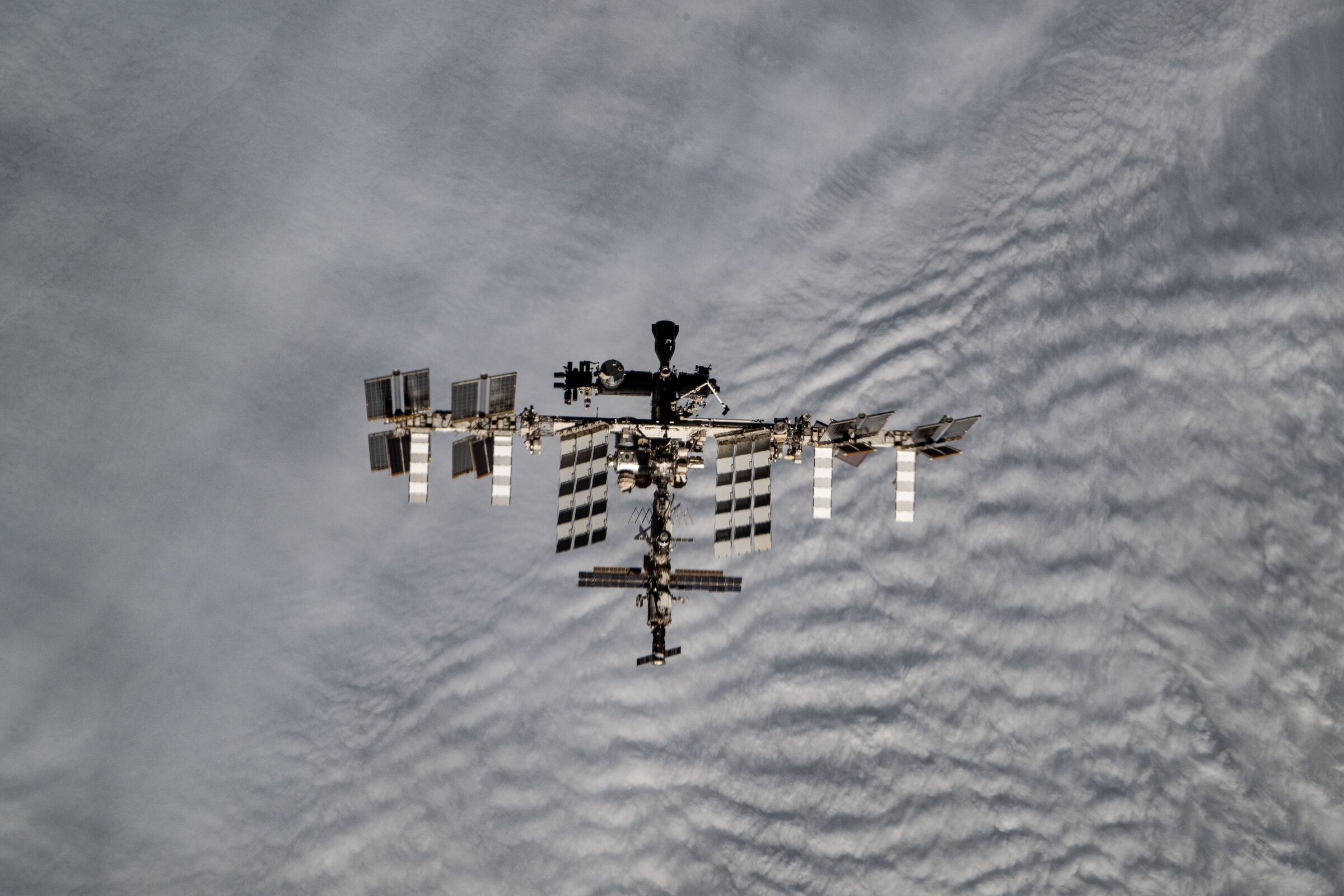
NASA's Johnson Space Center posted the final request for proposals for its Commercial Low Earth Orbit Destination Contract, solicitation 80JSC027R0004, on October 9, 2026. Proposals are due at 1:00 p.m. Central time on December 8, 2026, with the past performance volume requested two weeks early, on November 24. The cover letter plans the award for April 15, 2027. The contract is how NASA plans to keep its astronauts in low Earth orbit after the International Space Station, which is scheduled to retire in 2030; a Senate Commerce Committee bill that would run it through September 30, 2032 is not law. NASA's public list of interested parties names only the entities that chose to be listed, and it does not show who will submit proposals. This report follows the companies on the public record as building stations: their agreements with NASA, their stated dates, their hiring and their filings.
The solicitation sets a guaranteed minimum order of $100 million and a ceiling of $34.063 billion on what NASA may order. Orders are firm-fixed-price task orders under a multiple-award, indefinite-delivery, indefinite-quantity contract. The base ordering period runs eight years, April 2027 through March 2035, and two options could extend it through March 2042, 15 years in all.
NASA's pre-proposal charts, posted October 15, set out how it plans to choose. At award, two companies get a first task order covering initial design through critical design review and an integrated progress review, its last milestone due no later than 18 months after award, with 15 months desired. NASA intends to issue the competitive request for the next order, final development and certification, before that first work ends, and plans to give it and the first missions to one company "due to budget," with room to choose more. That company's guaranteed minimum grows by four missions, at least two of them Standard Service Missions: at least four crew, two of them U.S. government crew, for six months, with NASA's full research capability. NASA requires two seats per increment, asks for prices for three and four, and sizes its research needs at about half of what the ISS provides.
Price weighs about as much as mission suitability and past performance combined. Mission suitability is scored out of 1,000 points: 550 for the technical approach, 400 for management and 50 for small business use. NASA answered 1,075 industry questions in three rounds, the last released with the final request, and its charts count more than 1,000 initial comments on the July draft, with 300 changes accepted or modified and 200 suggestions declined.
NASA's planned award date has moved from 2026 to April 2027 since December 2024.
NASA approved its first strategy for this phase on December 6, 2024. It intended to issue a request for proposals in late 2025 and award firm-fixed-price contracts in 2026, NASA's August 2025 directive clarifications say. SAM.gov's version history for the 11 notices NASA has posted for this procurement since then holds 60 published versions between December 20, 2024 and October 15, 2026. An industry day posted on April 21, 2025, for early May was marked postponed on April 24. NASA reposted the meeting's charts as an industry update the same day and invited optional feedback on them by May 12.
A directive from NASA's then-acting administrator on August 4, 2025 dropped the planned contract in favor of more funded Space Act Agreements, SpaceQ reported. NASA posted the change on August 14, and its industry day charts of September 8 set out at least two awards, preferably three, within six months of an announcement due by October 4, 2025, and a crewed demonstration no later than 2030. Their notional schedule showed awards in April 2026. NASA's acquisition page had marked the contract acquisition on hold on August 14, 2025. NASA posted a draft Announcement for Partnership Proposal for the agreements on September 5, 2025 and held the virtual industry day on September 8. In June 2026 the Government Accountability Office reported that, as of May, NASA had not finalized its approach and planned to award one or more Space Act Agreements in 2026.
On January 28, 2026, NASA added the same line to two of the procurement's notices: its "procurement activities remain ongoing as the agency works to align acquisition timelines with national space policy." On March 25 it published two requests for information, one on stations and one on transportation. The station request said "NASA is not able to fund 2 commercial space stations" and described an alternative: a NASA-owned core module attached to the ISS, with two commercial modules attached to it. NASA returned to its original plan on June 1, SpaceQ reported, and removed the hold on June 4.
The draft request for proposals followed on July 6. NASA's charts for it planned the final request for August 2026, proposals in October and an award in spring 2027. On August 27 NASA changed the planned dates for the final request and for proposals; its acquisition page shows the final request planned for September, and NASA posted it on October 9.
Figure 1 as a table
| Plan | Set out | What NASA planned | Planned award |
|---|---|---|---|
| December 2024 plan: contracts | December 6, 2024 | Firm-fixed-price contracts after a request for proposals in late 2025 | 2026 |
| August 2025 plan: Space Act Agreements | August 14, 2025 | Funded Space Act Agreements, at least two awards within six months of an announcement due by October 4, 2025 | April 2026 |
| July 2026 draft: contracts | July 9, 2026 | Contracts again: final request for proposals in August 2026, proposals in October | spring 2027 |
| October 2026 final request | October 9, 2026 | Final request for proposals posted, proposals due December 8 | April 15, 2027 |
The money depends on Congress. The House Appropriations Committee's fiscal 2027 bill, approved in May, provides no less than $400 million for commercial LEO development and directs NASA to ensure at least one provider is available by the end of ISS operations, SpacePolicyOnline reported. A continuing resolution, P.L. 119-103, holds NASA at its fiscal 2026 level of $24.4 billion through December 11, three days after proposals are due. The GAO's June report found that NASA faces several risks that could lead to a gap in human presence in low Earth orbit.
Five station developers and eight of their named partners are on NASA's public list of interested parties.
On August 14 NASA posted a list of 39 entities that told it they were interested in the contract and agreed to be named. Five had NASA station agreements in the program's first phase: Axiom Space, Blue Origin, Sierra Space, Starlab Space and Vast. Eight others have been named in public as partners or builders for one of them. For Starlab, they are Airbus's U.S. arm, Leidos, MDA Space and Mitsubishi Corporation. Thales Alenia Space is assembling Axiom's first module in Turin, The Exploration Company has a cargo agreement with Vast, Boeing was named in 2021 to provide Orbital Reef's science module, and ILC Dover announced a partnership with Sierra Space on inflatable habitat modules in 2023. The other 26 include Rocket Lab, Varda Space Industries, Paragon Space Development Corporation, the Japan Aerospace Exploration Agency and the Space Frontier Foundation. Voyager Technologies, Starlab's majority owner, appears through Starlab Space.
The final request sets the terms suppliers will meet. Offerors must name any team member, subcontractor or supplier expected to receive $100 million or more over the contract, up from $50 million in the draft. The size standard for a small business is 1,300 employees under NAICS code 336414. A small business prime receives all 50 small business points. Other primes must file a subcontracting plan with goals phased across the first three contract line items, and the top rating calls for named small business partners with documented commitments, such as letters of intent or teaming agreements, doing technically significant or critical-path work. The final version deleted a clause titled Small Business Goals that the draft carried, and NASA cut its list of applicable documents from about 375 to about 175.
Published dates for Vast's and Axiom's first station hardware have each moved later at least twice.
Vast announced Haven-1 on May 10, 2023, for launch no earlier than August 2025. In May 2025 it told Spaceflight Now it was on track for May 2026, and on January 20, 2026 it moved Haven-1 to be ready to launch in the first quarter of 2027. The desk's claims ledger listed the May 2026 date as missed until this report's review on October 15. Its rules call a claim superseded when the company has given the same commitment a new date in its own words, so it now lists the May date as superseded and carries the first-quarter readiness date as pending. Vast's next NASA flight is a private astronaut mission to the ISS, ordered February 12, 2026, for no earlier than summer 2027.
Axiom's first module was planned for 2024 when NASA chose Axiom in January 2020, SpacePolicyOnline reported. In December 2024 Axiom said it could launch the module in early 2027, a claim the ledger lists as at risk. Redwire, which supplies the module's solar arrays, said on October 5 that Axiom plans to launch it in 2028, with a second module less than a year later. SpaceQ reported a first docking no earlier than 2028.
Starlab is planned to launch whole on one Starship flight. Voyager has given 2029 as the launch year in its filings since January 2025, most recently in its annual report of March 10, 2026, which puts the cost to design, build and launch the station at $2.8 billion to $3.3 billion. The ledger lists Starlab's January 2024 statement that it would launch before the ISS retires as pending. The desk found no Orbital Reef launch date published by Blue Origin or Sierra Space in 2026.
Figure 3 as a table
| Hardware | Stated | Stated launch | Ledger |
|---|---|---|---|
| Vast, Haven-1 | May 10, 2023, said | no earlier than August 2025 | |
| Vast, Haven-1 | May 7, 2025, said | May 2026 | superseded |
| Vast, Haven-1 | January 20, 2026, said | ready to launch in the first quarter of 2027 | pending |
| Axiom Space, first module | January 27, 2020, reported by SpacePolicyOnline | 2024 | |
| Axiom Space, first module | December 18, 2024, said | early 2027 | at risk |
| Axiom Space, first module | October 5, 2026, said by Redwire | 2028 | |
| Starlab Space, whole station | January 31, 2024, said | before the ISS is retired | pending |
| Starlab Space, whole station | January 21, 2025, said | 2029 | |
| Starlab Space, whole station | March 10, 2026, said | 2029 |
Job postings on five station-related companies' careers boards rose 39 percent from July 24 to October 15.
The desk's job feed reads each company's own careers board every day. Five of those boards belong to companies tied to stations: Voyager Technologies, Starlab's majority owner; Sierra Space, Blue Origin's Orbital Reef partner; Vast; Axiom Space; and Gravitics, a module builder. Counting a posting as live from the day it first appeared to the day it was last seen, live postings across the five boards rose from 502 on July 24 to 698 on October 15. Voyager Technologies went from 102 to 189, Axiom from 55 to 100, Sierra Space from 165 to 201, Vast from 165 to 188 and Gravitics from 15 to 20. Vast's count peaked at 212 on September 19, and Voyager's and Sierra Space's at 210 and 218 on October 7.
Each board covers the whole company. Voyager's carries its defense and space technology business, and none of the titles of its 189 postings live on October 15 names Starlab; Sierra Space's includes Dream Chaser, and Axiom's includes spacesuits. Blue Origin is left out: its board covers every program, and the desk's collector reads at most 300 roles from a Workday board on each run, fewer than Blue Origin lists, so its daily count cannot be rebuilt. Axiom's and Sierra Space's Workday boards stayed under that limit, at most 107 and 218 live postings. Gravitics' 20 postings compare with the 24 full-time employees and 7 contractors in its October 13 merger filing.
Figure 2 as a table
| Board | Jul 24 | Peak | Oct 15 |
|---|---|---|---|
| Voyager Technologies | 102 | 210 (Oct 7) | 189 |
| Sierra Space | 165 | 218 (Oct 7) | 201 |
| Vast | 165 | 212 (Sep 19) | 188 |
| Axiom Space | 55 | 107 (Sep 29) | 100 |
| Gravitics | 15 | 24 (Oct 11) | 20 |
| All five | 502 | 753 (Oct 7) | 698 |
This section sets out each company's NASA agreements, funding, stated dates, hiring and patents.
| Station | Axiom Station. The first module attaches to the ISS and a second follows within a year; together they form a four-crew station able to fly free. The first module is in final assembly at Thales Alenia Space in Turin, and the second is preparing for final assembly there, Redwire said on October 5, 2026. |
|---|---|
| NASA agreements | Module contract awarded February 28, 2020: firm-fixed-price, up to $140 million over up to seven years. USAspending lists 12 NASA prime awards with $603.8 million obligated, the largest $414.5 million for spacesuit services (80JSC022FA103). |
| Funding | $350 million in equity and debt on February 12, 2026, co-led by Type One Ventures and the Qatar Investment Authority. |
| Stated first launch | 2024 (reported 2020); early 2027 (said December 2024, ledger: at risk); 2028 (Redwire, October 2026). |
| Job postings | 55 on Jul 24, 100 on Oct 15; peak 107 on Sep 29 |
| Patent filings | 5 (0 granted), newest filed February 4, 2026 |
| Public filings | No filer under Axiom Space's own name in EDGAR's company search on October 15; investor vehicles named for Axiom Space have filed Form D notices since 2020. Funding figures here are Axiom's own. |
| Station | Haven-1, one module on a Falcon 9. Haven-2, proposed to follow the ISS: in October 2024 Vast said that if selected in 2026 its first module would be operational by 2028, with a 7-meter core module and four more modules added between 2030 and 2032. |
|---|---|
| NASA agreements | Unfunded Space Act Agreement in the program's first phase. Private astronaut mission ordered February 12, 2026. USAspending lists 2 NASA awards with $1.6 million obligated. |
| Funding | $500 million on March 5, 2026: $300 million in Series A equity and $200 million in debt, led by Balerion Space Ventures. Vast says more than $1 billion has been invested in its stations and facilities. |
| Other agreements | European Space Agency memorandum of understanding, October 6, 2026, for an initial three years, in Vast's account. |
| Stated Haven-1 launch | No earlier than August 2025 (said May 2023); May 2026 (said May 2025, ledger: superseded); ready to launch in the first quarter of 2027 (said January 2026, ledger: pending); launch in 2027 (said March 2026). |
| Job postings | 165 on Jul 24, 188 on Oct 15; peak 212 on Sep 19 |
| Patent filings | 4 (0 granted), newest filed October 7, 2025 |
| Public filings | No filer under Vast's own name in EDGAR's company search on October 15; two investor vehicles named for Vast filed Form D notices in 2026. Funding figures here are Vast's own. |
| Station | One-launch station on Starship. Voyager owned 61.2 percent of the joint venture on June 30, 2026, with Airbus, Mitsubishi and MDA Space as equity partners; Leidos was named its main assembly, integration and test provider in November 2025. |
|---|---|
| NASA agreements | Funded Space Act Agreement signed December 1, 2021, $217.5 million after the 2024 increase. Voyager reports $211 million earned by June 30, 2026, 97 percent of the total, and the same amount received in cash to date. The filing says all milestone payments have been earned and lists $6.5 million of eligible proceeds remaining. In June 2025 it expected the milestones to run through December 2025; in March 2026, through April 2026. The commercial critical design review, the 28th milestone, was completed February 23, 2026. |
| Funding | Voyager issued $402.5 million of convertible notes due 2032 on September 28, 2026. Starlab has a $20 million credit line from December 18, 2025 that matures after three years "or upon denial of NASA contract." |
| Stated launch | 2029, in Voyager's filings of January 2025 and March 2026. The ledger's separate claim, from January 2024, that Starlab launches before the ISS retires is pending. |
| Job postings | 102 on Jul 24, 189 on Oct 15; peak 210 on Oct 7 (Voyager Technologies, whole company) |
| Patent filings | 10 (8 as Voyager Space, 2 as Voyager Technologies; 1 granted) |
| SEC filings | 14 in the desk's filings record from May 4, 2026 to September 28, 2026: 8 8-Ks and 6 Form 4s. The shares closed at $27.26 on October 9, the day of the final request, against $42.32 on July 25, 2025; closes since then ranged from $17.99 to $51.77. |
| NASA agreements | Funded Space Act Agreement with Blue Origin, in partnership with Sierra Space: $130 million in 2021, raised by $42 million to $172 million on January 5, 2024. |
|---|---|
| Stated launch | None published in 2026 that the desk found. Blue Origin and Sierra Space are listed separately on NASA's list of interested parties. |
| Sierra Space | Dream Chaser's first flight, which Sierra Space put in late 2026, is pending in the ledger. Launch Library lists it no earlier than December 31, 2026, date to be determined, on a Vulcan; Vulcan has flown once this year, on February 12, and its next launch is scheduled for October 29. |
| Job postings | Sierra Space: 165 on Jul 24, 201 on Oct 15; peak 218 on Oct 7. Blue Origin: not counted. |
| Patent filings | Sierra Space 47 (18 granted); Blue Origin 371 (156 granted) across all its programs. |
| Public filings | Sierra Space filed a Form D on March 16, 2026: $550 million of equity sold, first sale March 2, to two investors. No filer under Blue Origin's own name in EDGAR's company search on October 15. |
Gravitics, a module builder with 24 full-time employees, is not on NASA's list. It is going public by merging with Non-Invasive Monitoring Systems, and its October 13 merger filing sets out its contracts with Axiom. Its May 2024 contract with Axiom, valued at $125 million, provided for a $6 million payment at the preliminary design review, contingent on Axiom receiving more equity funding. Gravitics completed the review and had collected $0.5 million by June 30, 2026; the filing says the rest was subject to financing that "did not occur." On September 29 the contract was suspended and replaced by a $270 million cargo contract covering the first of up to six cargo missions, with milestone payments and no financing condition, which Axiom may end on 30 days' notice. Gravitics says it has entered terms with a second station operator, which it does not name.
The desk could not confirm these points by October 15.
- Who will bid. NASA's list holds only entities that chose to be named, and it does not show who will submit proposals.
- How Voyager's statement that all Starlab milestones have been earned squares with the $6.5 million of eligible proceeds its filing lists as remaining.
- Whether Blue Origin and Sierra Space will bid Orbital Reef together, and how much of the $172 million agreement NASA has paid.
- Axiom's own date for its first module. The 2028 dates come from Redwire and SpaceQ.
- Whether Haven-1's environmental tests at NASA's Neil Armstrong Test Facility, planned for later in 2026, have begun.
- Axiom's and Vast's funding beyond their own releases. EDGAR's company search shows no filer under either company's own name.
- The controlled part of NASA's technical library for the contract. This report draws on public documents only.
This report draws on the sources and data below.
Contract terms are from the final request for proposals, its cover letter, its summary of changes and NASA's pre-proposal charts of October 15, 2026, all public attachments to SAM.gov notice 80JSC027R0004. The notice trail is SAM.gov's own version history for the procurement's 11 notices, read on October 15; the desk's RFP index holds 12 of those postings, from seven of the notices, collected since July 24, 2026. NASA's earlier plans are from its August 14, 2025 directive clarifications and September 8, 2025 industry day charts, its commercial stations page as last updated August 15, 2025, its acquisition page, the July 9, 2026 draft charts and the March 2026 requests for information. The interested-party labels were made by reading each entry against the sources named here; a second reader, a model reading each entry with web search and without the desk's labels, agreed on 36 of 39 (92.3 percent), and the desk changed three labels after confirming each disagreement in a source. Hiring counts are from this site's job feed, rebuilt per company from each posting's first and last day seen. Patent counts are from this site's patent index, filings and share closes from its SEC and price records, launch dates from its launch record, and claim statuses from its claims ledger, re-assessed on October 15. Agreement values and milestone payments are from NASA's releases of January 27, 2020 and January 5, 2024 and Voyager's SEC filings; NASA contract totals are from USAspending, read October 15, 2026. Filings for the private companies are from EDGAR's company and Form D searches of the same day. Company dates, funding and partnerships are from the companies' releases and filings, Redwire, SpaceQ and SpacePolicyOnline. Congressional figures are from SpacePolicyOnline and the risk finding from the GAO report of June 17, 2026. An outside model reviewed the draft against these sources before publication.